Monday, August 1, 2016

Martin Luther King, Jr. Speaks To Us Today


On December 18, 1963 Dr. Martin Luther King, Jr. was on the campus of Western Michigan University in Kalamazoo, Michigan.

He came into town on the heels of a major snowstorm to address an audience of 2,000 that had gathered as part of a Conscience of America symposium.

Dr. King spoke four months after having given his famous "I Have a Dream" speech on the Washington Mall, and he had much to say that seems to directly address those of us living in the United States over five decades later.

In fact, considering the current state of political, racial, ethnic and religious antagonism that exists, you could say his 1963 speech was nothing short of prophetic.

"The wind of change is blowing all over our world today. It is sweeping away an old order and bringing into being a new order... The old order of colonialism is passing away, and the new order of freedom and human dignity is coming into being.,, With this new sense of dignity and this new sense of self-respect, a new Negro came into being, with the new determination to struggle, to suffer and sacrifice in order to be free."

Change never comes easy. And some of that difficulty lies with the majority order letting go of prejudice and privilege.

Dr. King went on to address the current state of world affairs.

"The world in which we live is geographically one. Now we are challenged to make it one in terms of brotherhood. We must all learn to live together as brothers or we will perish together as fools. This is the great challenge of the hour. This is true of individuals. It is true of nations. No individual can live alone. No nation can live alone."

After giving the example of a recent visit to India, where he found hundreds of millions of people without enough to eat, Dr. King said;

"I started to think about the fact that we spend millions of dollars a day to store surplus food. I said to myself, I know where we can store that food free of charge, the wrinkled stomachs of the millions of God's children that go to bed hungry at night. All I'm saying is simply this, that all life is interrelated. That somehow we're caught in an inescapable network of mutuality tied in a single garment of destiny. Whatever affects one directly affects all indirectly. For some strange reason I can never be what I ought to be until you are what you ought to be. You can never be what you ought to be until I am what I ought to be."

Dr. King then directly addressed segregation.

"We are challenged to get rid of the notion, once and for all, that there are superior and inferior races...There was a time when people used to argue this notion on the basis of religion and the Bible. It is tragic how individuals will often use religion and the Bible to misuse religion and the Bible to crystalize a status quo and justify their prejudices."

Then he spoke about two myths that get in the way of social change.

"One argument is the myth of time. This myth says in substance that only time can solve problems that we face in the area of human relations. So there are those who say to individuals struggling to make justice a reality, Why don't you wait and stop pushing so hard? If you will just be patient and wait...the problem will work itself out... The only answer that one can give to this myth is that time is neutral. It can be used either constructively or destructively...Somewhere along the way we must see that time will never solve the problem alone but that we must help time. Somewhere we must see that human progress never rolls in on the wheels of inevitability. It comes through the tireless efforts and the persistent work of dedicated individuals who are willing to be co-workers with God."

"The other myth,.. is that legislation cannot really solve the problem...while it may be true that morality cannot be legislated, behavior can be regulated. It may be true that the law cannot change the heart but it can restrain the heartless."

At the time Dr. King was referring to civil rights legislation, which still needs to be safeguarded and monitored. Witness recent efforts to curtail voter registration among minorities in the south. 

His remarks are just as apropos in arguing against any suggestion that we need to limit immigration or deport members of various religious or ethnic groups.

And Dr. King spoke to the importance of love in non-violent resistance.

"The Greek language has a word, 'agape.' Agape is more than romantic or aesthetic love. Agape is more than friendship. Agape is creative, understanding, redemptive good will for all men. It is an overflowing love that seeks nothing in return. Theologians would say that this is the love of God operating in the human heart. When one rises to love on this level, he loves every man. He rises to the point of loving the person who does the evil deed while hating the deed that the person does. I believe that this is the kind of love that can carry us through this period of transition. This is what we've tried to teach through this nonviolent discipline."

As Dr. King came towards the conclusion of his speech, he remarked that modern psychology had given us the term 'maladjusted.'

"But I say to you my friends... there are certain things in our nation and in our world which I am proud to be maladjusted and which I hope all men of goodwill will be maladjusted  (to)... I say very honestly that I never intend to become adjusted to segregation and discrimination. I never intend to become adjusted to religious bigotry. I never intend to adjust myself to the madness of militarism, to self-defeating effects of physical violence..."

And his final thought was a profound and powerful hope for the future of our world and our country,

"In spite of the difficulties of this hour, I am convinced that we have the resources to make the American Dream a reality... Somehow, with this faith (in God), we will be able to adjourn the councils of despair and bring new life into the dark chambers of pessimism. With this faith, we will be able to transform the jangling discords of our nation into a beautiful symphony of brotherhood. This will be a great day. This will be the day when all God's children, black men and white men, Jews and Gentiles, Protestants and Catholics will be able to join hands and sing in the words of the old Negro spiritual, 'Free at last! Free at last! Thank God, Almighty, we are free at last!'"

Here's a transcript of the entire speech.

Photo Credit. www.seattletimes.com


Monday, July 25, 2016

Honoring God


Recently over breakfast, I had the opportunity to catch up with a friend.

Our conversation at the Cornerview Cafe lasted over an hour. But it was one of those moments when time seemed to pass by at the speed of light.

He talked about his family and how he was doing in walking out his relationship with God.

Towards the end of our time together, my friend said, "To me, the most important thing is honoring God."

Then we got up, paid our bill and walked out into the parking lot to say good-bye.

What my friend said has stuck with me. And it's got me thinking: How does anyone honor God?

The whole idea of honoring the Creator of the Universe can seem daunting. Almost impossible.

Until we stop to consider that, if God is a being, and we are made in God's image, then we can begin to answer the question in terms of deepening a friendship.

So, starting with that foundation, the following few tips are offered:

We honor God by spending time with God.

We honor any friend when we think enough of them to spend time with them.

Think of your best friend. What motivates you to see them face-to-face? Why isn't phoning, or Facebooking, or texting or emailing enough?

What is it about the face-to-face encounter?

Only then can we see into their eyes as they are speaking. Only then can we fully appreciate the tone of their voice. Only then can the unspoken become part of the conversation.


We honor God by listening.

It sounds so easy and simple.

But how often are we in the middle of a discussion without being fully present? How often is the dialogue interrupted by our own distractions?

Far too often, three minutes into a chat we're already gone. Our bodies may still be there, but our minds are elsewhere. Or we can dominate the conversation blocking out opportunities for grace to express itself.

While listening isn't always silent, it's helpful. (See Proverbs 46.10)


We honor God by our conscious appreciation.

I'm as guilty as the next person when it comes to missing opportunities to express my appreciation. How frequently do we remind our close friends how much they mean to us? How often do we tell God, out loud, how much God means to us?

It's not like God needs to know this. After all God is supposedly all-knowing, right? It's mainly for our own benefit that God encourages us to show appreciation.

Worship is one way. Prayer is another. Taking 15-20 minutes at the start of your day to dwell on an aspect of God's character (called Centering Prayer) is a practical tip to accomplish this.

Here's a one minute video explaining some of the benefits, that includes a link to a centering prayer website.


We honor God by loving.

Loving God should naturally flow from spending time with God, listening to God and appreciating God.

During the Last Supper, Jesus (God's Son) encouraged his apostles to love one another.(John 13.34). In one of his epistles, the apostle John continued, "Beloved, let us love one another, for love is of God...for God is love." (1 John 4.7)


We honor God by becoming like God.

It's not much of a leap of faith, or logic, to reach this conclusion.

After all, don't we tend to be influenced by the company we keep? The imprints of friendships are found throughout our lives.

How much more so should it be with God. Spending time with, listening to, appreciating and loving God will all impact and deepen our relationship with God, and, in turn, every other friendship we have.

Photo Credit: www.goministries.net


Monday, July 18, 2016

Meet Rene Gutteridge, Author

Rene Gutteridge is the award-winning and best-selling author of twenty-four multi-genre novels and is a seasoned collaborator in both fiction and film. She has novelized six screenplays and movies, including her newest, Old Fashioned, with writer/director Rik Swartzwelder. Her romantic comedy with screenwriter Cheryl McKay, Never the Bride, won the Carol Award in 2010 for Best Women’s Fiction.  Her new titles include two more novelizations with Cheryl McKay, Love’s a Stage and O Little Town of Bethany. Her seven suspense books include Possession, Misery Loves Company, Ghost Writer and Escapement.
Her indie film, the comedy SKID, was deadCenter Film Festival’s Best Oklahoma Feature Film Winner in 2015 and also won Best Oklahoma Feature at Red Dirt and Trail Dance. She is a creative consultant on Boo, a script based on her beloved novel series, which is in development at Sodium 11 Entertainment with Andrea Nasfell (Moms’ Night Out) as screenwriter. Her novel My Life as a Doormat was adapted into a Hallmark film called Love’s Complicated which premiered in January of 2016 and scored 2.1 million viewers.  She is a full-time writer for The Skit Guys.
Find her on Facebook and Twitter or at her website, www.renegutteridge.com

You have had quite a diverse career as a writer. Is there anything, in particular, that you’re most proud of?

I guess I’m most proud of not giving up. When I set out to be a writer, when I decided that was the thing I was good at and how God wanted to use me, I had no idea what I was doing. I had studied screenwriting in college, and I knew the nuts and bolts of it all, but there really is nothing at all that can prepare you for the climb.  For every individual writer, it’s not like you’re climbing Mt. Everest, it’s like you’re the first person to ever climb it.  It’s so individual to each person, that there is nothing that can prepare you for the exact path that is going to be yours to take.  It may be riddled with failure. It may be a soaring success. It may take a turn you never saw coming. And so there’s really no roadmap. I tried to stay true to who I was as a writer, while also being humble enough to learn. I really had no business sense at all when I started out, so quite frankly, I can’t believe I made it at all. I have to thank God’s goodness and a lot of gracious people who cheered me on and offered advice along the way. I’m just really glad that I didn’t give up, because there were some awfully trying days. There still are.


You’ve written in several genes, including suspense (The Storm Series), romance (My Life as a Doormat) and mixing it up with comedy and a bit of detective work (The Occupational Hazard and Boo series). Is there one genre you enjoy over any other?

Not one above the other, really. I always say I follow the story, not the genre, so each one is enjoyable. I feel suspense lets me play more and I am able to enjoy the process, not worrying so much as I write.  Comedy is the most difficult, but it has the biggest pay off for me.  When you write that thing that makes someone roar out loud with laughter, it’s the most amazing feeling. But it takes so much work. I don’t think people know what precise detail goes into writing comedy.  That one funny line that made you laugh took twenty lines to set up, all in an exact order, all with particularly chosen words leading up to a big moment.  At the end of a day of writing comedy, I usually have a headache.


Speaking of series work, you’ve done at least 3 of them (Storm Series, Occupational Hazard and Boo). What was the motivation behind going beyond one book?

Some ideas lend themselves better to series. They’re usually stories with a set of characters that will be interesting no matter what kind of setting you put them into. Boo, interestingly, was my third book and I did not set out to write it as a series. But when it came out, it kind of shot right out of the gate and it was so peculiar I think it sold well just because it looked and seemed so weird.  But it did well enough that the publisher came back and said, “Hey, do you have another idea for a book like this?”  I didn’t have an idea, but I did have a title: Boo Who. So I sat down and wrote out an idea that went that title.  I did two more after that, both of which were based solely on the title that I had first: Boo Hiss and Boo Humbug.  It was a little magical for me…it was like these books had their own little way about them and they just needed a writer to find their way out.


You’ve novelized a few films (OLD FASHIONED for instance). What was the attraction for you?

Novelizations have for the most part come from the publisher’s end. They’ll typically buy the novelization rights to a movie and then seek out a writer they think would be a good fit for the project. I’ve been very fortunate to do several of them and they’ve all been a blast, and I always felt very humbled to be a part of them.  The other novelizations I do, from script to book, before the movie is ever made, come from my relationship with screenwriter Cheryl McKay. I got to know Cheryl after I novelized her movie THE ULTIMATE GIFT. She showed me another script she’d written called Never the Bride. I read it and loved it and decided to see if I could pitch it as a novel. We’ve done four script-to-novel projects so far. They’re really fun.


You’ve had two of your novels turned into films (Skid, and My Life as a Doormat, which became the Hallmark Channel’s LOVE'S COMPLICATED). What was that like? Can you describe your involvement in both of these projects?

They were both really amazing and in completely different ways.

SKID was a small indie film that we filmed locally in Oklahoma.  It was fully funded, paid for in cash by one investor. That hardly ever happens and I can’t explain what a gift it was. It took a full three years, from beginning to end, to finish and it was the hardest work of my life.  It was immensely rewarding because of all the creative involvement I had. I wrote the script, adapted from my book, but I also got to be on set every day and make big and small decisions along with the producer and director. It was a very emotional experience for me. I remember walking the actress who played Lucy to the set, and she was in costume and we were just chatting and I was just struck with how surreal it was to be walking next to my character and talking with her! She’s living and breathing right off the page!

Hallmark was interesting because I had literally nothing to do with the making of the movie. My project was in the hands of other artists, and they adapted it how the envisioned it. It was thoroughly thrilling to watch it unfold. Having worked in both the adaptation of novels to movies and movies to novels, I think I have a unique perspective on the process, so I can really appreciate how difficult it is to adapt a book to a movie.  A movie to a book is a far easier process. It was thrilling in every sense of the word to see writers, actors and the director interpret my original vision. I’m thankful for their talent.


How about your work with The Skit Guys? How does skit writing differ from writing a novel?

If you talk to my screenwriting professor, he will undoubtedly tell you that I stuck out from the crowd because every semester of screenwriting I would write a full-length screenplay, instead of the thirty pages that was required.  I’ve always been a long writer, so I knew Skit Guys would be particularly challenging for me. They do high-level short film work so I had a lot to learn. But what I brought with me was years of experience writing Christian comedy sketches. It’s been an absolute thrill working with them. They’re really good at what they do, but also very humble and encouraging. I’m one part of a large team of people who work to uplift others with their talents.


You are such a prolific writer! Do you have a writing routine that you follow?

You learn pretty early on as a professional writer that discipline should be as close of a friend as creativity.  I’ve navigated a lot of different seasons. I became a professional writer at the age of 22, and I’m now 43. I’ve had so many different seasons to work through as far as the discipline of writing goes. I’ve had newborns, toddlers, seasons of health problems, teenagers. Every season presents its discipline challenges, so you find your way.  Right now, with my kids really very busy and self-sufficient, I do a lot of work at coffee houses. It’s been a good change of scenery from my years at the desk.  But in every writing day, I try to read the headlines. It takes me out into the world for a little bit, before I go into my imaginary world.  My biggest rule, though, is that my kids have access to me at any time during the day. It has helped them know they’re more important than anything I’m doing on the computer.  When they were little I had this sign hanging on my door that said: No entry while writing! (Unless you’re John or Cate). They loved that.


What’s your biggest challenge as a writer?

Well, the challenges have always been the same: believing in myself, trusting my gut, working through what seems impossible. Every story starts the same way, with a big, blank, white page. And it’s always intimidating.


One of your earlier novels (Listen) has a distinct moral lesson driving the plot. Looking back, was your writing process for Listen any different than for your other books?

It wasn’t. But it has an interesting story to it. I wrote this book about the power of words, and then as I was finishing the final editing, we learned that our son was enduring some horrible bullying at school.  It was such a strange whirlwind of a time. I ended up speaking about bullying and the power of words in a very personal way that I hadn’t expected when I set out to write the book.  I did one radio interview where they set me up as sort of this “bullying expert” and it was difficult because I kept thinking, “I’m no expert. I’m a novelist and now the mom of a bullied kid. I’m heartbroken, but no expert.”  But I also knew, if I could tell our story, I could help others. So I did, as painful as it was. 


Speaking of writing process, overall, how would you say yours has developed over the years?

Well, hopefully for the better! I’ve learned to write tighter, that’s for sure. And I think I’ve learned to have more fun in the process…worry less, play more.  I’ve never enjoyed the editing phase, so I’m still one who tries to write a very strong first draft.  I have friends who just spill everything out on the page and then love the editing process. I can’t do that at all.


What is your definition of success, as a writer (artist) and as a person?

As a writer, success to me is always loving it. The writing business can be harsh and beat you down a little. If I still love writing a story at the end of the day, then I feel successful.  As a person, it’s simple for me. Love God and love others.  And not eat a gallon of ice cream in one day.


Who are a couple of your favorite writers? And why?

Right now I’m mesmerized by the writing of Karen Thompson Walker.  Age of Miracles blew me away. I’m a very eclectic reader, so I just sort of follow what interests me. But I always, always love C.S. Lewis.


Considering your own success, I’d be remiss not to ask if you had any lessons you’ve learned that you’d like to pass along to aspiring writers.

Never hold on too tightly.  It can wreck your life.  Love books. Write books. Enjoy books. Work hard. Write hard. Learn as much as you can. But don’t let success or failure wreck your life. A wrecked life really robs all creativity. It stifles the artist’s heart.


You also helped develop Write Well. Sell Well. Can you describe what that’s all about?

It’s a regional writer’s conference held in Oklahoma City.  We’re affordable and smaller, and pride ourselves in equipping writers creatively and on a business level as well. We have a lot of fun too.  You can find out more at www.writewellsellwellokc.com.

Photo Credit. www.tyndale.com


Monday, July 11, 2016

Surviving a 24/7 news cycle


This has been quite a summer.

Politics heating up. Racial tensions heightened by killings. Brexit.

Those of us who visit social media sites with any kind of frequency have been lambasted with the news and opined to death.

Rather than give yet another take on all of these happenings, I'm simply going to offer my own survival guide.

Limit your news/social media intake.

The thing about the news business is it's a business.

And it's on 24/7.

You are under no obligation to keep up with the news cycle. I'm not advocating total withdrawal. But set up your own safe zone and know your limits.

And realize that not all news sources are created equal. For instance, there's a vast difference between radio talk shows and news. The main purpose of many talk shows is to stir up your emotions about a topic, regardless of facts. Be smart, turn them off.

Do yourself a favor and don't rely only on televised news. Many network news programs actually fall into the entertainment category. Seldom getting beyond reciting headlines.

Consider limiting your social media (i.e. Facebook, Twitter, Instagram etc.) as well. When the social discourse turns ugly, resist the urge to hit below the belt. Instead take the time to gather facts that will help guide you towards positive solutions.


Give your soul time to breath.

Life goes by quickly.

Often the beautiful gets drowned out by the sensational.

Take the time to be purposeful. S-l-o-w down. Reflect. Regenerate.

Your soul and spirit aren't like your brain. Although they are connected to it.

We need time to absorb things in order for them to make sense.

If we don't allow for that process to happen then a disconnect can occur among our brain, soul and spirit, leading to all sorts of consequences. Ideally, what we're striving for is internal unity not cognitive dissonance.


Nurture your sense of humor.

A sense of humor is essential to survival.

It's also the canary-in-the-coalmine of your emotions.

That is, if you find that's it been a while since you've laughed out loud, then there's a good chance that current events are sucking the oxygen out of your life.

According to www.helpguide.org, "Laughter decreases stress hormones and increases immune cells and infection-fighting antibodies, thus improving your resistance to disease. Laughter triggers the release of endorphins, the body's natural feel-good chemicals. Endorphins promote an overall sense of well-being and can even temporarily relieve pain."

A cautionary sidenote: Being cynical and sarcastic as a way of life isn't the same as laughing.


Do something spiritual.

I'm not trying to convert anyone.

But I am suggesting that we, as human beings, have a spirit. And that spirit needs to be nurtured just as much as our soul.

Prayer helps.

According to Psychology Today praying improves self-control, makes you nicer, makes you more forgiving, increases trust and offsets negative effects of stress.

So the next time you read or hear about some bad news, try praying about it.


Practice being thankful.

This is sort of related to doing something spiritual.

Ann Voskamp wrote an outstanding book on this subject called One Thousand Gifts.

She takes a biblical perspective (i.e. Book of Psalms) on why being thankful is good and expands upon it, using her own experience.

Simply put, being thankful lifts your spirit and soul and renews your mind.  It gets us in the habit of seeing life from a deeper, fuller, richer perspective. Voskamp suggests keeping a thanks journal, listing the things you are thankful for each day.

She would be the first to point out that being thankful doesn't deny that terrible things happen. But it does help to temper the shock.

Finally, if you're so inclined to watch, here's a clip of Amy Grant singing, "We Believe in God" which, in my opinion, is one of the most honest worship songs I've ever heard.


Now it's your turn: Feel free to leave a comment regarding how you deal with the 24/7 news cycle.

Photo Credits:
www.buzzmachine.com
www.tumblr.com
www.boundless.org


Monday, July 4, 2016

Elie Wiesel's legacy


In the New York Times' obituary of Elie Wiesel, Joseph Berger wrote: "No single figure was able to combine Mr. Wiesel's moral integrity with his magnetism, which emanated from his deeply lined face and eyes as unrelievable melancholy."

The melancholy came from Mr. Wiesel's own experience with the Holocaust as a teenager, surviving Auschwitz and Buchenwald, being liberated from the Buchenwald death camp when he was sixteen.

Wiesel became a powerful, consistent, relentless witness to this horror. He felt it was the reason that he had survived.

"I believe, profoundly that anyone who listens to a witness becomes a witness," he once said.

"Never shall I forget," he said. "Because if we forget, we are guilty, we are accomplices."

Later in his life Mr. Wiesel helped to found the U.S. Holocaust Memorial Museum in Washington, D.C.

"He brought a kind of moral and intellectual leadership and eloquence, not only in the memory of the Holocaust, but to the lessons of the Holocaust," said Sara Bloomfield, the current Holocaust Memorial Museum director.

Over five decades, Mr. Wiesel was a living touchstone for generations across the world, serving as a reminder of the horrors of intolerance and apathy.

President Obama in eulogizing Mr. Wiesel, said, "He raised his voice not just against antisemitism, but against hatred, bigotry and intolerance."

"All collective judgments are wrong," Mr. Wiesel said. "Only racists make them."

But as important as functioning as a witness was to Mr. Wiesel, part of that witness was to prod us to act. "Action is the only remedy to indifference, the most insidious danger of all. Indifference, to me, is the epitome of evil," he said in his Nobel Peace Prize speech.

"Neutrality helps the oppressor, never the victim. Silence encourages the tormentor, never the tormented."

Mr. Wiesel strongly desired to impress this message among the millions who read his books or heard him speak.

"The opposite of beauty isn't ugliness, it is indifference. The opposite of faith is not heresy, it's indifference. And the opposite of life is not death, but indifference between life and death."

And perhaps speaking prophetically, in what could be seen as the summation of his life's work, he said: "The opposite of love isn't hate. It is indifference."

Photo credit: www.thefamouspeople.com


Monday, June 27, 2016

Meet filmmaker Sharon Wilharm: Writer/Director of Providence

Sharon Wilharm always envisioned a life of missionary service. Instead, God called her to writing and filmmaking, allowing her films to minister to individuals around the world.  She and her husband, Fred, travel the southeast and midwest promoting their movies and speaking at film and church events. 

Sharon's passion is encouraging individuals to listen to God and discover the unique path He has destined for them. 

Recently their film, Providence, won ICVM’s Gold Award for Best Drama of 2016 (under $250,000), as well as ICVM's Bronze for Best Picture (overall); Silver for Best Evangelistic; and Bronze for Best Youth Picture.


On your Faith Flix website, you wrote that “I never intended to be a filmmaker.” What got you started?

Fred always wanted to be a filmmaker and got his degree in broadcast communication, but at the time we started dating, he was a businessman with a chain of coin laundries and I was a school teacher. Then he started working on a local history documentary and before I knew what was happening, it transformed into a faith-based feature with me writing the script, directing, and playing the lead role. I didn't have a clue what I was doing so I hated it. I swore I'd never ever do another movie, but God had other plans.

You began your career as an educator (teaching elementary, middle and high schoolers). Did you teach drama and film from the beginning?

I started off as a 5th grade school teacher then when our daughter was born I homeschooled her from preschool through graduation. When she was in middle school I started teaching drama and film at her homeschool tutorial. I've always loved drama and directed my first children's musical when I was a freshman in high school. Through the years my primary ministry at church has been directing drama for children, youth, and adults.

What is the appeal of film? Why does this particular method of communication attract you?

Film didn't initially appeal to me. I much preferred live theater. But as I found myself involved in Fred's projects, it grew on me. Now I love it! I love the brevity and the simplicity of screenwriting. I love visual storytelling, especially incorporating costume, color, and composition to make for beautiful and powerful images.

Do you have any favorite filmmakers or films?

I like character driven films like Driving Miss Daisy, Because of Winn Dixie, and Legally Blonde that are distinctly feminine and funny but also reveal much about human nature. My favorite tv show is Joan of Arcadia. It is brilliantly written and shot and can have me pondering it for weeks afterwards. It incorporates a Christian worldview in such an artsy way. I hate that it only lasted 2 seasons. It has probably inspired me as a filmmaker more than anything else.


Your most recent film, Providence, has no dialogue. Why did you make this choice? Were any other of your films made this way?

Providence is our second silent film. Our first was The Good Book. We were trying to avoid the cheese factor and to literally show, not tell. At first, no one had a clue how to respond to The Good Book. But then it started doing well in film festivals and we discovered that we were better at telling a story visually than with dialogue. We didn't think it would be possible to do it again, but then when I started writing Providence, I quickly discovered that it lent itself best to visual storytelling as well. If/when we do another movie, though, it will be a talkie and I'll take all that we've learned from The Good Book and Providence and apply it to a more traditional script.

Looking back on your life why did you choose an education major when you were in college? Do you see any crossover into filmmaking?

I majored in education because I couldn't come up with anything better. I always saw it as temporary and figured it would be good prep for whatever more exciting work God had in store for me. And it has done just that. Perhaps the best skills I learned from being a teacher that has helped in filmmaking is the ability to organize and to quickly learn names.

Can you describe your filmmaking process? (How long does it usually take to write the script? Decide on location? Choose cast? Shoot? Edit?)

From initial idea to finished script generally takes between 4-8 months. Actually, the more experienced we get, the longer it takes because I've gotten more meticulous. Locations are easy since we film the majority of our movies in our house or locations in our small town. When I'm writing a script, it's written with our available locations in mind. Casting takes several months. Shooting several months. Editing, several months. Pretty much once we have a finished script, it takes us about a year to cast, shoot, edit, and get ready to release.

What’s your favorite part about the filmmaking process itself? What’s the most challenging?

Writing and planning is what I enjoy most, imagining all the possibilities and figuring out how to make it happen. Originally filming was my most challenging, but as I've learned and grown, it comes a lot more naturally now. Editing is frustrating for me because once I finish filming I'm ready to just relax and not think about it for a while, but I can't because my input is needed for the editing process. I tend to be pretty grumpy during the post production time because I'm just so worn out by that point.


Your films have won numerous awards, including ICVM's Gold Award for Best Picture 2016 (under $250,000). Do any of the awards stand out to you for their significance?

At last count we had accumulated 78 festival accolades, but each one holds some significance.  They each represent a group of people who appreciated our movie enough to make it available for others to enjoy. The true value of festivals is that they help attract new audiences and provide validation that this is a movie that is worthy of being watched. Now, getting back to your question, if I had to narrow it down, I would say Pan Pacific Film Festival was really special because it was in Los Angeles. So it was exciting to travel to L.A. and be a part of the red carpet experience. The greatest honor, though, was having Providence nominated for four Crown awards at the ICVM awards, including being up for Best Picture alongside War Room, Beyond the Mask, and Until Forever. That is just mind boggling to me that our little silent film could even be considered in the same breath as such incredible films. Isn't God amazing?


Can you describe how you and your husband Fred work together on your films?

When we first starting filmmaking together we tended to get on each other’s nerves a lot. We would each try to be in control and not listen to the other one. Then we'd get frustrated when the other did something different than what we wanted. But over time we've learned what our strengths and weaknesses are and we use that to advantage. We communicate a lot initially, planning the shots, and making sure we're each on the same page. Then we trust each other to each do our job and to do it well. Now by the time everyone else arrives on set, we know what we're doing and we work together to get it done.

Do you have any words of wisdom to offer for new filmmakers? Or those thinking of getting into filmmaking?

If you're thinking about making movies so you can get rich and famous, find something else to do. Filmmaking is hard work and little money. The only reason to do it is if this is what God has called you to do, and even then, you need to be on your knees in prayer the whole time because it's a tough business. If you go into it as a calling, as a way to minister through film, God can use you. But if you come in with a giant ego, that ego will quickly get deflated.

How can readers get a copy of/view your films?

All our movies are available online at Christian Cinema. Providence is also available at Faith Flix online and at LifeWay Christian Stores. The Good Book is available at most Christian retailers. Flowers for Fannie is available at some Family Christian Stores and online at iTunes and a number of other online sites.

Is there anything else you’d like to mention?

To learn more about our movies, visit our website at www.faithflix.com and follow us on Facebook, Twitter, and Pinterest. In addition, each of our movies has a Facebook page and a Twitter account.


Monday, June 20, 2016

The mystery is this!


Within Paul's letter to the Colossians, there's a magnificent description of who Jesus is. (Col. 1:15-20).

Jesus is described in the following ways:

. the visible image of the invisible God (vs. 15)
. existing before anything was created (vs. 15)
. creating everything through God (vs. 16)
. holding all things together (vs. 17)
. head of the church (vs. 18)
. reconciling us to God (vs. 20)
. making peace with everything in heaven and on earth (vs. 20)

As if this wasn't powerful enough, there's a little gem tucked a bit further down the letter. Paul mentions a "secret." He goes on to share what it is;

"For God wanted them (us) to know that the riches and glory of Christ is for you Gentiles too. And this is the secret; Christ lives in you." (vs. 27 NLT)

The NKJ version says it this way:

"To them (us) God willed to make known what are the riches of the glory of this mystery among the Gentiles, which is Christ in you, the hope of glory."

Wow.

Spiritually speaking, we have Victoria Falls flowing in us.

God's Son somehow dwells in us.

It's pretty straight forward and very powerful. In fact, it's potentially one of the most explosive scriptures in the Bible.

So, if it's true, why don't more people, especially believers, live like it? (Remember that Paul was writing this letter to people who professed belief in God and God's Son.)

1. We really don't believe it.

This is perhaps the most obvious. Even those who attend church on a regular basis may go out of habit and not because of relationship. 

2. We really don't understand it.

Not so obvious. It's sort of like looking at the universe of US citizens. I would wager that most of us don't have a basic understanding of the Bill of Rights. Even to the point of being able to answer: "What is the Bill of Rights?"

Similarly so, many of us who call ourselves Christian have no idea of the full scope of who Jesus is (according to Paul's description above). So our view of God's Son would be quite limited.

3. We can't grab hold of the significance of it.

This is a little different that understanding. It's sort of like knowing that there's such a thing as gravity, but not having a clue as to its significance. (In case you're wondering, gravity is a big thing. God uses it to keep the entire universe in place, for openers).

4. We don't spend time meditating on it.

This is huge!

We can't truly understand the significance of God's Son unless we think about God.

Many of us are quick to dismiss a not-so-well-thought-out concept of God and God's Son. 

I'm the first to admit that I haven't spent a ton of time meditating on the description of God's Son written in Colossians. But if I were to dismiss God's Son without at least spending time meditating on those verses I'd be spiritually short-changing myself.

5. So, the secret that Paul writes about remains a secret!

We can fail to grab hold of the very essence of the gospel and the Bible. 

Is it any wonder that US church attendance is shrinking? Why would you bother to spend an hour on Sunday with someone that you don't know very well?

In this kind of a situation, our focus can easily be taken off God and God's Son. We become centered on ourselves and become bored, confused and tired of encountering an extremely watered down, ineffective version of a very powerful God.

Or we can invent our own story, substituting who we think God is for who God may actually be.

Either way, we're not living aware of the spiritual reality of God's Son living inside us.

But what if it's true that God's Son is as magnificent as those verses in Colossians say God is?

What if the secret to a successful life is captured with the secret that Paul describes?

And what if we really do have direct access to the awesome Creator of the Universe each day?!

What then?


Liar, Liar, Pants on Fire!

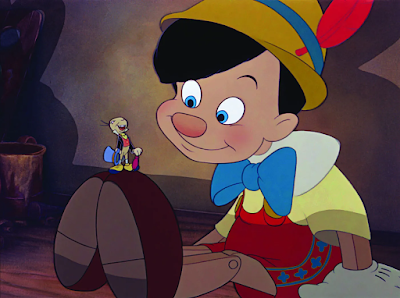
Pinocchio: Art Credit, Disney If ever there were a time for a national "Liar, Liar, Pants on Fire" award, it's now. And certai...